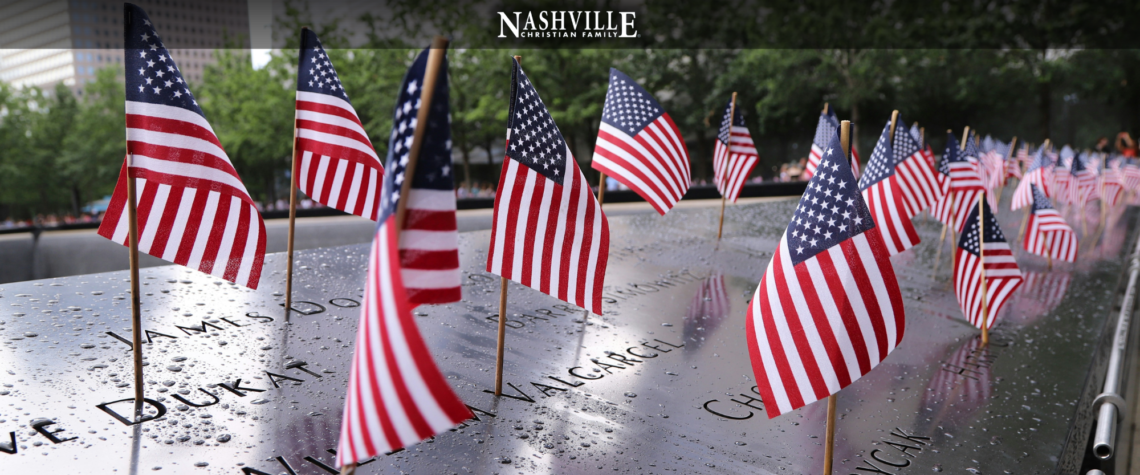
In September of 2001 I was in the eighth grade. We knew something was happening. You could feel it move through the building the way weather moves through a house before anyone says a word out loud. Three of the other teachers in our cohort rolled the televisions in. Ours refused.
I don’t know what her real reasoning was. Maybe she thought she was protecting us. But I know she claimed it was more important that we do our English lessons. She was wrong, school doesn’t trump societal changes. Nor does it trump family, and certainly not faith. But I’ll be honest with you: I’ve never quite gotten over it. Something enormous happened to my country while I sat in a room where we were told to keep working, and by the time I understood what it was, I had already missed the moment nearly everyone else my age can point to. To this day, I am not much of a fan of that teacher. Ten years later, on September 12, 2011, I walked into a Navy recruiter’s office for the first time.
I picked that date on purpose, mostly because September 11, 2011 was a Sunday. It’s the day after. That has always been the part that stuck with me. Not the eleventh, when the thing was done to us, but the twelfth, when a whole lot of ordinary people got up and decided what they were going to do about it. Firefighters went back into the pile. Strangers lined up at blood banks in cities that hadn’t been touched. Generations of men went looking for a recruiter’s office. The eleventh is the day we were attacked. The twelfth is the day we answered.
I spent my career as a Navy Explosive Ordnance Disposal technician. It’s the job where, when everyone else is told to move back, you’re the one who walks forward. Part of me thinks I waited too long, but I have recognized that was just the part I had laid out before me. I did have the absolute honor to learn and to serve alongside the people who were there day one. Their standard of courage is something I am still trying to live up to. I ended my Navy career on September 16, 2019. My life keeps getting bracketed by that month, and after a while you stop calling it coincidence.
I’m aware that the twenty-five years since that morning are contested ground. People argue about the wars: whether they should have been fought, how they were fought, how they ended. I’m not going to settle any of that in an article, and I’m not going to pretend I don’t have my own complicated feelings about some of it. But I’ve never once been sorry that I served. I’m grateful I was able to contribute something. That gratitude and those complications live in the same man without much trouble, and I’d guess that’s true for most veterans you know.
What I’d ask people to sit with this Patriot Day is what all that service and sacrifice actually did to this country, because it runs deeper than the parts you can see. Some of it is easy to see. The way we fly. The memorials. The ceremonies every September.
Some of it happened behind the scenes and never made the news. Marriages that bent under repeat deployments, and the ones that held. Children raised largely by one parent for stretches at a time. Careers set down and never picked back up. Whole families who reorganized their lives around a war most of the country was able to forget about between headlines. And some of it is a struggle people will carry for the rest of their lives. The injuries you can see and the ones you can’t. The friends who came home and are still, in some real sense, not all the way home. Those men and women are in your church, in your neighborhood, in the truck next to you on whichever Pike you drive. Twenty-five years is a long time to be at war, and the bill for it has not stopped arriving.
I don’t have a tidy explanation for any of it. What I have is faith that there is a plan for all of it, even the parts that look like failure from where I’m standing. That’s a thing I have to remind myself of on purpose. The other thing I try to keep in front of me is this: our enemies are not only of this world. Scripture is plain about it. I spent a career dealing with the flesh-and-blood kind of threat, the kind you can put your hands on and render safe. It took me longer to understand that it was never the whole fight. There’s a war underneath the one on the news, and it doesn’t demobilize.
There’s a generation in our country now that was born after all of this. To them September 11 is a chapter, the way Pearl Harbor was a chapter to me. That’s not their fault; that’s just how time works. But if you get the chance to tell them something this year, tell them about the twelfth. Tell them about the people who got up the next morning and went toward it. That’s the part worth inheriting.
—Austin Holmes is a Navy EOD veteran
who lives in South Nashville